


2008 Brunello di Montalcino
Podere Sante Marie

| Wine Type: | red |
| Vintage: | 2008 |
| Bottle Size: | 750mL |
| Blend: | Sangiovese |
| Appellation: | Brunello di Montalcino |
| Country: | Italy |
| Region: | Tuscany |
| Producer: | Podere Sante Marie |
| Winemaker: | Luisa & Marino Colleoni |
| Vineyard: | Planted in 1998, 1.5 ha total |
| Soil: | Volcanic Marl |
| Aging: | 48-month elevage in Slavonian oak botti ranging from 5 to 25 hL and from 3 to 10 years old |
| Farming: | Organic |
| Alcohol: | 14% |
More from this Producer or Region

2020 Toscana Rosso
Italy | Tuscany
With an unmistakably Italian nose, it recalls the grippy tannins of a bright Chianti and the stateliness of an aged Bordeaux.

2018 Brunello di Montalcino
Italy | Tuscany
This 2018 is compact and absolutely brimming with energy, culminating in a grippy, stony tannin.

2020 Chianti Classico
Italy | Tuscany
This beautiful rosso is brimming with notes of black cherries, blood orange, and earth; pour it alongside your favorite cut of meat, now or in twenty years.

2018 Brunello di Montalcino Riserva “Santa Maria”
Italy | Tuscany
Colleoni’s Santa Maria is coursing with raw beauty, exuding rose petals and turned earth and finishing with tannins fine as silk.

2017 Brunello di Montalcino
Italy | Tuscany
This 2017 is compact and absolutely brimming with energy, culminating in a grippy, stony tannin.

2023 Toscana Rosso “Monteleccio”
Italy | Tuscany
Biodynamically farmed, Brunello-quality grapes with the thrill of early and festive drinkability.

2019 Toscana Rosso “Brendino”
Italy | Tuscany
Planting Pinot Nero in limestone at high elevation yields a singular rosso that is anything but international in style.

Extra Virgin Olive Oil
Italy | Tuscany
Bright, intense green with hints of fennel and parsley, a Tuscan treasure.
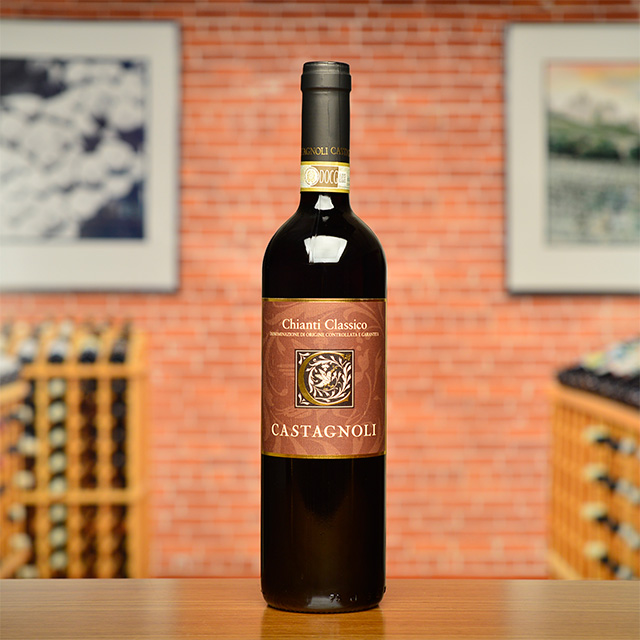
2023 Chianti Classico
Italy | Tuscany
A delicious Chianti Classico for now or later, with extraordinary potential at table.

2019 Chianti Classico “Ai Lecci”
Italy | Tuscany
This bottling highlights a parcel shielded from the afternoon sun by tall oaks (lecci), yielding a gentler Chianti characterized by sultry fruit and velvety tannins.

About The Producer
Colleoni
Luisa and Marino Colleoni’s native Bergamo is famous for its medieval palaces, but to them it just couldn’t compare to Tuscany. The couple purchased a property outside Montalcino known as Le Sante Marie and moved in 1993. During a walk, they spotted grapes through the leaves of a tree. They got to work clearing away scrub and when they finished, a neatly planted vineyard lay before them. They summoned an inspector and had the vineyard certified for Brunello. They embraced organic viticulture, and constantly search for even more natural methods. The northern exposure, high altitude, and marl soil that of this property all combine to give elegant and fine Brunellos that sets itself apart from the majority of Brunellos in Montalcino.
About The Region
Tuscany

Perhaps no region is tied to Italy’s reputation as a producer of fine wine as much as Tuscany. Since Etruscan times, viticulture has played a prominent role in this idyllic land of rolling hills, and the Tuscan winemaking tradition remains as strong as ever today. With a favorable Mediterranean climate, an undulating topography offering countless altitudes and expositions, and a wealth of poor, well-draining soils, conditions are ideal for crafting high-quality wines. Add to that the rich gastronomical tradition—Tuscany is home to some of the country’s finest game, pastas, salumi, and cheeses—and you have the blueprint for a world-class wine region.
This is Sangiovese territory; in fact, it is arguably the only place in the world where Sangiovese reaches a truly regal expression. In spite of a rocky history with fluctuations in quality, traditionally produced Chianti has reclaimed its status as one of the country’s most reliable, food-friendly reds, while the rapid rise of Brunello di Montalcino shows the grape’s potential for grandiose, opulent reds allying power and finesse. Traditionally-minded growers have stuck to using only indigenous grape varieties and employing techniques like aging in massive wooden casks known as botti, creating wines of terroir that shine at the Tuscan table.
Tuscan wines have had a place in our portfolio since Kermit’s first visit in 1977. While the names of the estates have changed, the spirit of those first unfiltered Chiantis he imported live on through our current selections.
More from Tuscany or Italy
2023 Toscana Rosso “Monteleccio”
Sesti Italy | Tuscany
2022 Chianti Classico Riserva
Podere Campriano Italy | Tuscany
2020 Toscana Rosso
Cuna Italy | Tuscany
2019 Chianti Classico “Ai Lecci”
Villa di Geggiano Italy | Tuscany
2017 Brunello di Montalcino
Sesti Italy | Tuscany
2023 Chianti Classico
Castagnoli Italy | Tuscany
2021 Chianti Classico Riserva “Terrazze”
Castagnoli Italy | Tuscany
2019 Chianti Classico Riserva
Villa Di Geggiano Italy | Tuscany
2021 Rosso di Montalcino
Ferretti Italy | Tuscany
2017 Brunello di Montalcino
Ferretti Italy | Tuscany
2019 Brunello di Montalcino Riserva “Santa Maria”
Colleoni Italy | Tuscany
2012 Chianti Classico Riserva MAGNUM
Villa Di Geggiano Italy | Tuscany
2023 Toscana Rosso “Monteleccio”
Sesti Italy | Tuscany
2022 Chianti Classico Riserva
Podere Campriano Italy | Tuscany
2020 Toscana Rosso
Cuna Italy | Tuscany
2019 Chianti Classico “Ai Lecci”
Villa di Geggiano Italy | Tuscany
2017 Brunello di Montalcino
Sesti Italy | Tuscany
2023 Chianti Classico
Castagnoli Italy | Tuscany
2021 Chianti Classico Riserva “Terrazze”
Castagnoli Italy | Tuscany
2019 Chianti Classico Riserva
Villa Di Geggiano Italy | Tuscany
2021 Rosso di Montalcino
Ferretti Italy | Tuscany
2017 Brunello di Montalcino
Ferretti Italy | Tuscany
2019 Brunello di Montalcino Riserva “Santa Maria”
Colleoni Italy | Tuscany
2012 Chianti Classico Riserva MAGNUM
Villa Di Geggiano Italy | Tuscany
Where the newsletter started

Where the newsletter started
Every three or four months I would send my clients a cheaply made list of my inventory, but it began to dawn on me that business did not pick up afterwards. It occurred to me that my clientele might not know what Château Grillet is, either. One month in 1974 I had an especially esoteric collection of wines arriving, so I decided to put a short explanation about each wine into my price list, to try and let my clients know what to expect when they uncorked a bottle. The day after I mailed that brochure, people showed up at the shop, and that is how these little propaganda pieces for fine wine were born.—Kermit Lynch