


2023 Chinon “Les Granges”
Bernard Baudry

There is nothing immediately striking about the vineyards of Chinon. Row after row of vines gently rise from the river plain of the Vienne, a tributary to the Loire, and creep up toward chalky white cliffs topped with a densely wooded plateau. But this unassuming landscape is home to a whole universe of Cabernet Franc, where growers like Matthieu Baudry coax myriad delightful styles of wine from a single grape variety.
Matthieu’s father, Bernard, got started in 1975 with just two hectares of vines, and as he gradually grew his holdings, he realized the true value of the riches lying under his feet. The incredible diversity of soil types over a small distance meant endless potential to craft a thrilling lineup of terroir-driven wines, and Bernard soon became a specialist in this soil-based approach to Chinon, along with other pioneers like his contemporary Charles Joguet. Matthieu joined his father’s domaine in 2000 and soon converted the vineyards to organic, aiming to foster biodiversity and minimize treatments so as to further enforce the expression of terroir through the lens of their parcel-by-parcel vinifications.
If Chinon’s grandest wines come from the upper slopes, where tuffeau limestone yields Cabernet Franc with deep flavors, a firm structure, and a remarkable capacity for aging, the appellation’s most charming bottlings come from the flatter river banks covered in alluvial sand and gravels. The Baudrys source their cuvée Les Granges from such loose, well-draining soils, whose tendency to warm up quickly in sunny weather favors ripening and avoids any of the austere, vegetal notes for which Cabernet is infamous.
What Les Granges lacks in tannic structure, it makes up for in irresistible fruit and heady floral aromas. This is Loire Cabernet in its purest form, low in alcohol but high in perfume, which the Baudrys harness through low-intervention techniques like aging only in concrete and bottling unfiltered with barely any sulfur. That suave, silky texture is a delight when it swishes over the palate, especially when matched to a simple meal from fresh ingredients. A cool glass of this cuvée proves that magic is not just in the air, but in Chinon, it’s also in the soil.
—Anthony Lynch
| Wine Type: | red |
| Vintage: | 2023 |
| Bottle Size: | 750mL |
| Blend: | Cabernet Franc |
| Appellation: | Chinon |
| Country: | France |
| Region: | Loire |
| Producer: | Bernard Baudry |
| Winemaker: | Matthieu & Bernard Baudry |
| Vineyard: | Planted between 1985 and 1988, 9 ha |
| Soil: | Gravel, Sand |
| Aging: | Aged in concrete tanks |
| Farming: | Organic (practicing) |
| Alcohol: | 12% |
More from this Producer or Region

2024 Chinon “Beaux Monts”
France | Loire
Sourced from the village of Beaumont, it is utterly delicious, with a perfect balance of fruit and earth.

2023 Chinon “Le Domaine”
France | Loire
It’s a textbook Chinon, and you’ll struggle to find a red as authentic and perfectly suited to your fall table.

Vouvray Brut
France | Loire
Made from Chenin Blanc in the Champagne method, this cuvée is the quintessential apéritif sparkling wine, with notes of pear and a fine bead.
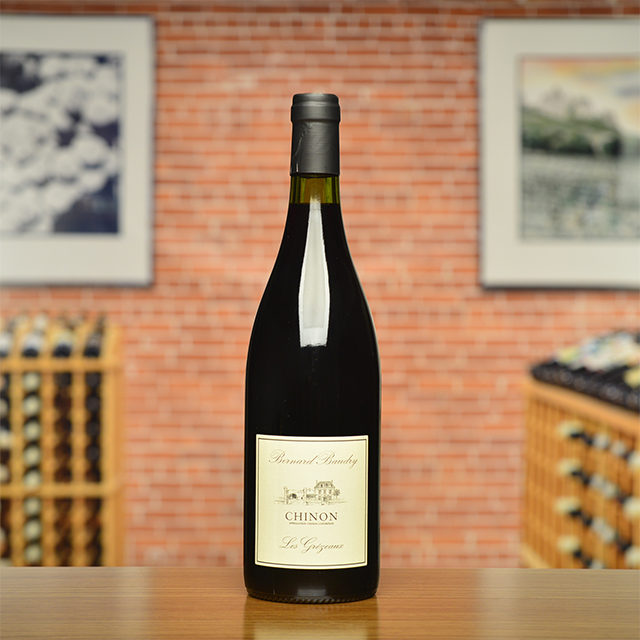
2023 Chinon “Les Grézeaux”
France | Loire
Les Grézeaux comes from the Baudry’s oldest vines, which yield a concentrated and silky rouge that is ready to drink today but will age beautifully.

2021 Chinon “La Croix Boissée”
France | Loire
This is the grandest bottling of Cabernet Franc from one of Chinon’s most outstanding producers.
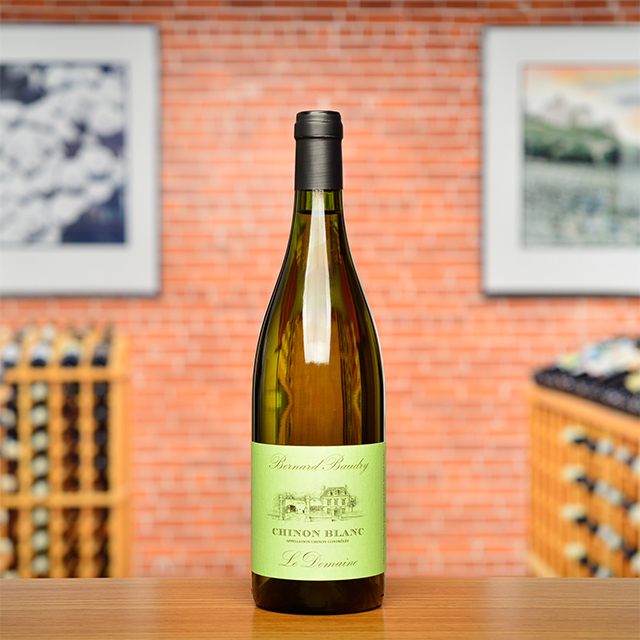
2023 Chinon Blanc
France | Loire
A rare Chenin Blanc from the land of Cabernet Franc, it is ultra fresh and brimming with citrus blossom and orchard fruit notes.

2024 Chinon “Les Granges”
France | Loire
Les Granges is the Baudry cuvée to drink in its youth, while the perfume of rose petals and brambly berries is at its most vivid and vibrant.

2025 Chinon Rosé
France | Loire
Matthieu Baudry captures both youthful fruit and energizing mineral textures with this rosé.

2025 Jasnières
France | Loire
Racy, exotically perfumed, and loaded with minerality, this wine is an excellent representation of how Chenin reacts to the local conditions.

2022 Chinon “Le Clos Guillot”
France | Loire
With a glance at the dark purple color—the hue of a Kalamata olive—and a sniff of the nose heavy on dark ripe fruit and black tea, I get a little giddy. I can tell I’m going to enjoy this.


About The Producer
Bernard Baudry
About The Region
Loire

The defining feature of the Loire Valley, not surprisingly, is the Loire River. As the longest river in France, spanning more than 600 miles, this river connects seemingly disparate wine regions. Why else would Sancerre, with its Kimmeridgian limestone terroir be connected to Muscadet, an appellation that is 250 miles away?
Secondary in relevance to the historical, climatic, environmental, and cultural importance of the river are the wines and châteaux of the Jardin de la France. The kings and nobility of France built many hundreds of châteaux in the Loire but wine preceded the arrival of the noblesse and has since out-lived them as well.
Diversity abounds in the Loire. The aforementioned Kimmeridgian limestone of Sancerre is also found in Chablis. Chinon, Bourgueil, and Saumur boast the presence of tuffeau, a type of limestone unique to the Loire that has a yellowish tinge and a chalky texture. Savennières has schist, while Muscadet has volcanic, granite, and serpentinite based soils. In addition to geologic diversity, many, grape varieties are grown there too: Cabernet Franc, Chenin Blanc, Sauvignon Blanc, and Melon de Bourgogne are most prevalent, but (to name a few) Pinot Gris, Grolleau, Pinot Noir, Pineau d’Aunis, and Folle Blanche are also planted. These myriad of viticultural influences leads to the high quality production of every type of wine: red, white, rosé, sparkling, and dessert.
Like the Rhône and Provence, some of Kermit’s first imports came from the Loire, most notably the wines of Charles Joguet and Château d’Epiré—two producers who are featured in Kermit’s book Adventures on the Wine Route and with whom we still work today.
More from Loire or France
2024 Chinon “Les Granges”
Bernard Baudry France | Loire
2024 Sancerre
Domaine Hippolyte Reverdy France | Loire
2023 Chinon Blanc
Bernard Baudry France | Loire
2025 Bourgueil Clairet “Avis de Vin Fort”
Catherine & Pierre Breton France | Loire
2025 Val de Loire Rouge Grolleau
Catherine & Pierre Breton France | Loire
2021 Saumur Champigny “La Marginale”
Thierry Germain France | Loire
2024 Bourgueil “Cuvée Alouettes”
Domaine de la Chanteleuserie France | Loire
2016 Chinon “Les Varennes du Grand Clos” MAGNUM
Charles Joguet France | Loire
2023 Vouvray Sec “Le Portail”
Champalou France | Loire
2024 Bourgueil “Trinch!”
Catherine & Pierre Breton France | Loire
2025 Jasnières “Cuvée du Silex”
Pascal Janvier France | Loire
2018 Muscadet Sèvre et Maine “Gorges”
Domaine Michel Brégeon France | Loire
2024 Chinon “Les Granges”
Bernard Baudry France | Loire
2024 Sancerre
Domaine Hippolyte Reverdy France | Loire
2023 Chinon Blanc
Bernard Baudry France | Loire
2025 Val de Loire Rouge Grolleau
Catherine & Pierre Breton France | Loire
2021 Saumur Champigny “La Marginale”
Thierry Germain France | Loire
2024 Bourgueil “Cuvée Alouettes”
Domaine de la Chanteleuserie France | Loire
2016 Chinon “Les Varennes du Grand Clos” MAGNUM
Charles Joguet France | Loire
2023 Vouvray Sec “Le Portail”
Champalou France | Loire
2024 Bourgueil “Trinch!”
Catherine & Pierre Breton France | Loire
2025 Jasnières “Cuvée du Silex”
Pascal Janvier France | Loire
2018 Muscadet Sèvre et Maine “Gorges”
Domaine Michel Brégeon France | Loire
Kermit once said...

Kermit once said...
A good doctor prescribed the wine of Nuits-Saint-Georges to the Sun King, Louis XIV, when he suffered an unknown maladie. When the king’s health was restored the tasty remedy enjoyed a vogue at court. Lord, send me a doctor like that!
Inspiring Thirst, page 117