


2018 Chianti Classico Riserva
Villa Di Geggiano
Aged for roughly a year longer than most Chianti Classico, this Riserva from the iconic Villa di Geggiano shows impressive finesse and luminous freshness, along with density and structure. While many Classicos make beautiful pairings for vegetarian dishes like a creamy pasta filled with wild mushrooms, this bottling merits being opened the next time you prepare your favorite cut of beef.
—Tom Wolf
| Wine Type: | red |
| Vintage: | 2018 |
| Bottle Size: | 750mL |
| Blend: | 97% Sangiovese 3% Cabernet Sauvignon |
| Appellation: | Chianti Classico Riserva |
| Country: | Italy |
| Region: | Tuscany |
| Producer: | Villa di Geggiano |
| Winemaker: | Andrea & Alessandro Boscu Bianchi Bandinelli |
| Vineyard: | 30 years, 7 ha total |
| Soil: | Clay, Silt, Sand, Limestone |
| Aging: | Ages 20 months in French oak tonneaux (500-L, 90%) and barriques (225-L, 10%) (15% new); 10 months in 12-hl and 20-hl French oak botti |
| Farming: | Organic (certified) |
| Alcohol: | 14% |
More from this Producer or Region
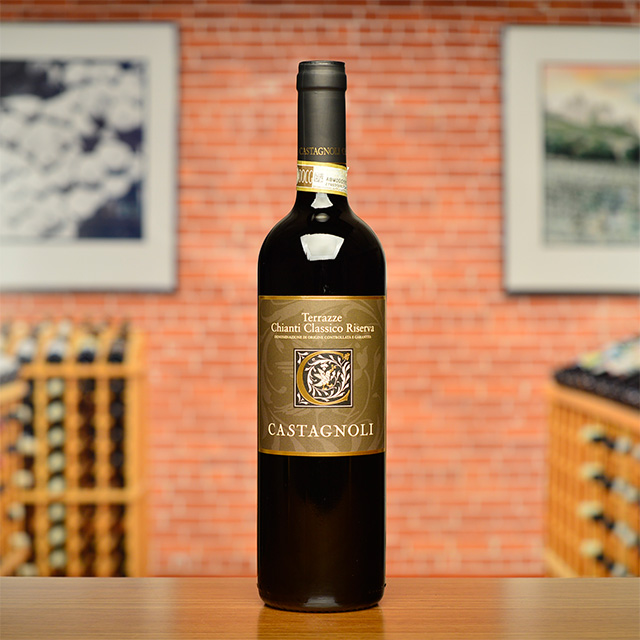
2021 Chianti Classico Riserva “Terrazze”
Italy | Tuscany
A decidedly bright, aromatic, almost exotic Chianti, with aromas of black olive, violets, iron, and smoked meat.

2019 Brunello di Montalcino Riserva “Santa Maria”
Italy | Tuscany
From a cool site at high elevation, his Santa Maria Riserva exudes the gentle touch proper to this Montalcino artisan, with a seductive aroma of rose petals.

2020 Chianti Classico
Italy | Tuscany
This beautiful rosso is brimming with notes of black cherries, blood orange, and earth; pour it alongside your favorite cut of meat, now or in twenty years.

2018 Brunello di Montalcino
Italy | Tuscany
This 2018 is compact and absolutely brimming with energy, culminating in a grippy, stony tannin.

2019 Chianti Classico “Ai Lecci”
Italy | Tuscany
This bottling highlights a parcel shielded from the afternoon sun by tall oaks (lecci), yielding a gentler Chianti characterized by sultry fruit and velvety tannins.

2017 Brunello di Montalcino
Italy | Tuscany
With a regal perfume that is both sweet and savory, a ripe berry fruit accented by balmy herbs and earthy wafts of incense, this enthralling Brunello is already approachable, but will reward you if you set aside a few bottles to open over the next ten years.

2012 Chianti Classico Riserva MAGNUM
Italy | Tuscany
It expresses both down-home rusticity and an aristocratic elegance—a telltale sign of authentic Chianti.

Extra Virgin Olive Oil
Italy | Tuscany
Bright, intense green with hints of fennel and parsley, a Tuscan treasure.

2022 Chianti Classico
Italy | Tuscany
The 2022 is pungently savory with herbaceous reminders of the Tuscan countryside.

2019 Chianti Classico Riserva
Italy | Tuscany
Concentrated, youthful, and soulful, this Sangiovese is enchanting now, but it has a long life full of gorgeous evolution ahead.


About The Producer
Villa di Geggiano
About The Region
Tuscany

Perhaps no region is tied to Italy’s reputation as a producer of fine wine as much as Tuscany. Since Etruscan times, viticulture has played a prominent role in this idyllic land of rolling hills, and the Tuscan winemaking tradition remains as strong as ever today. With a favorable Mediterranean climate, an undulating topography offering countless altitudes and expositions, and a wealth of poor, well-draining soils, conditions are ideal for crafting high-quality wines. Add to that the rich gastronomical tradition—Tuscany is home to some of the country’s finest game, pastas, salumi, and cheeses—and you have the blueprint for a world-class wine region.
This is Sangiovese territory; in fact, it is arguably the only place in the world where Sangiovese reaches a truly regal expression. In spite of a rocky history with fluctuations in quality, traditionally produced Chianti has reclaimed its status as one of the country’s most reliable, food-friendly reds, while the rapid rise of Brunello di Montalcino shows the grape’s potential for grandiose, opulent reds allying power and finesse. Traditionally-minded growers have stuck to using only indigenous grape varieties and employing techniques like aging in massive wooden casks known as botti, creating wines of terroir that shine at the Tuscan table.
Tuscan wines have had a place in our portfolio since Kermit’s first visit in 1977. While the names of the estates have changed, the spirit of those first unfiltered Chiantis he imported live on through our current selections.
More from Tuscany or Italy
2019 Chianti Classico Riserva
Villa Di Geggiano Italy | Tuscany
2019 Chianti Classico “Ai Lecci”
Villa di Geggiano Italy | Tuscany
2021 Chianti Classico Riserva
Podere Campriano Italy | Tuscany
2020 Toscana Rosso
Cuna Italy | Tuscany
2019 Brunello di Montalcino Riserva “Phenomena”
Sesti Italy | Tuscany
2017 Brunello di Montalcino
Ferretti Italy | Tuscany
2022 Chianti Classico
Podere Campriano Italy | Tuscany
2020 Chianti Classico
Villa di Geggiano Italy | Tuscany
2022 Rosso di Montalcino
J.G. Benda Italy | Tuscany
Extra Virgin Olive Oil
Sesti Italy | Tuscany
2012 Chianti Classico Riserva MAGNUM
Villa Di Geggiano Italy | Tuscany
2017 Brunello di Montalcino
Sesti Italy | Tuscany
2019 Chianti Classico Riserva
Villa Di Geggiano Italy | Tuscany
2019 Chianti Classico “Ai Lecci”
Villa di Geggiano Italy | Tuscany
2021 Chianti Classico Riserva
Podere Campriano Italy | Tuscany
2020 Toscana Rosso
Cuna Italy | Tuscany
2019 Brunello di Montalcino Riserva “Phenomena”
Sesti Italy | Tuscany
2017 Brunello di Montalcino
Ferretti Italy | Tuscany
2022 Chianti Classico
Podere Campriano Italy | Tuscany
2020 Chianti Classico
Villa di Geggiano Italy | Tuscany
2022 Rosso di Montalcino
J.G. Benda Italy | Tuscany
Extra Virgin Olive Oil
Sesti Italy | Tuscany
2012 Chianti Classico Riserva MAGNUM
Villa Di Geggiano Italy | Tuscany
2017 Brunello di Montalcino
Sesti Italy | Tuscany
Kermit once said...

Kermit once said...
Living wines have ups and downs just as people do, periods of glory and dog days, too. If wine did not remind me of real life, I would not care about it so much.