


2021 Chianti Classico Riserva “Fondatore”
Podere Campriano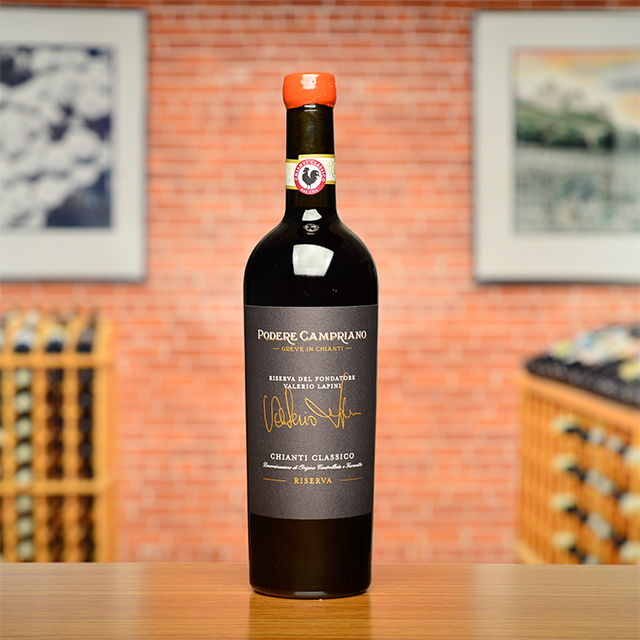
The Lapini family’s micro-production comes from just two hectares of vineyards, which means only Elena, Luca, and son Pietro work in the vines and cellar, while their bushy Bernese mountain dogs lounge afoot. At their agriturismo they also cure salamis and prosciutto, make olive oil and other specialties, and eagerly welcome guests to taste it all.Their old-vine Fondatore shines next to Elena’s signature gnocchi dish that’s a riff on a classic pesto: in place of basil, toss together fresh mint and fragrant sage, add pecorino, olive oil, garlic, and roasted walnuts. The herbal, grounding aromas in the Tuscan pesto echo the density and depth of this striking riserva.
—Jane Augustine
| Wine Type: | red |
| Vintage: | 2021 |
| Bottle Size: | 750mL |
| Blend: | Sangiovese |
| Appellation: | Chianti Classico Riserva |
| Country: | Italy |
| Region: | Tuscany |
| Producer: | Podere Campriano |
| Winemaker: | Elena Lapini, Luca Polga |
| Vineyard: | Planted in 1980; .18 ha |
| Soil: | Galestro (Clay and Schist), Limestone |
| Farming: | Organic (certified) |
| Alcohol: | 13.5% |
More from this Producer or Region

2017 Brunello di Montalcino
Italy | Tuscany
With a regal perfume that is both sweet and savory, a ripe berry fruit accented by balmy herbs and earthy wafts of incense, this enthralling Brunello is already approachable, but will reward you if you set aside a few bottles to open over the next ten years.

2018 Brunello di Montalcino
Italy | Tuscany
Ample, deep, and succulent, this enthralling Brunello is already highly rewarding.

2022 Chianti Classico
Italy | Tuscany
The 2022 is pungently savory with herbaceous reminders of the Tuscan countryside.
2023 Chianti Classico
Italy | Tuscany
A delicious Chianti Classico for now or later, with extraordinary potential at table.

2021 Rosso di Montalcino
Italy | Tuscany
This site yields a lively, focused Rosso, featuring a mineral backbone that provides crystalline structure to the juicy, savory red fruit that cascades over the palate.

2019 Chianti Classico Riserva
Italy | Tuscany
Concentrated, youthful, and soulful, this Sangiovese is enchanting now, but it has a long life full of gorgeous evolution ahead.

2012 Chianti Classico Riserva MAGNUM
Italy | Tuscany
It expresses both down-home rusticity and an aristocratic elegance—a telltale sign of authentic Chianti.

2017 Brunello di Montalcino
Italy | Tuscany
This 2017 is compact and absolutely brimming with energy, culminating in a grippy, stony tannin.

2021 Chianti Classico Riserva
Italy | Tuscany
Fragrant notes of Tuscan herbs, forest floor, and brambles define this Sangiovese, possibly the perfect comfort wine for a homemade plate of pasta.

2018 Brunello di Montalcino Riserva “Santa Maria”
Italy | Tuscany
Colleoni’s Santa Maria is coursing with raw beauty, exuding rose petals and turned earth and finishing with tannins fine as silk.


About The Producer
Podere Campriano
About The Region
Tuscany

Perhaps no region is tied to Italy’s reputation as a producer of fine wine as much as Tuscany. Since Etruscan times, viticulture has played a prominent role in this idyllic land of rolling hills, and the Tuscan winemaking tradition remains as strong as ever today. With a favorable Mediterranean climate, an undulating topography offering countless altitudes and expositions, and a wealth of poor, well-draining soils, conditions are ideal for crafting high-quality wines. Add to that the rich gastronomical tradition—Tuscany is home to some of the country’s finest game, pastas, salumi, and cheeses—and you have the blueprint for a world-class wine region.
This is Sangiovese territory; in fact, it is arguably the only place in the world where Sangiovese reaches a truly regal expression. In spite of a rocky history with fluctuations in quality, traditionally produced Chianti has reclaimed its status as one of the country’s most reliable, food-friendly reds, while the rapid rise of Brunello di Montalcino shows the grape’s potential for grandiose, opulent reds allying power and finesse. Traditionally-minded growers have stuck to using only indigenous grape varieties and employing techniques like aging in massive wooden casks known as botti, creating wines of terroir that shine at the Tuscan table.
Tuscan wines have had a place in our portfolio since Kermit’s first visit in 1977. While the names of the estates have changed, the spirit of those first unfiltered Chiantis he imported live on through our current selections.
More from Tuscany or Italy
2022 Rosso di Montalcino
J.G. Benda Italy | Tuscany
2012 Chianti Classico Riserva MAGNUM
Villa Di Geggiano Italy | Tuscany
2019 Chianti Classico “Ai Lecci”
Villa di Geggiano Italy | Tuscany
2018 Brunello di Montalcino
Sesti Italy | Tuscany
2020 Chianti Classico
Villa di Geggiano Italy | Tuscany
2021 Rosso di Montalcino
Ferretti Italy | Tuscany
2022 Chianti Classico
Podere Campriano Italy | Tuscany
2020 Toscana Rosso “Brendino”
Cuna Italy | Tuscany
2018 Brunello di Montalcino
Ferretti Italy | Tuscany
Extra Virgin Olive Oil
Sesti Italy | Tuscany
2021 Chianti Classico Riserva
Podere Campriano Italy | Tuscany
2019 Brunello di Montalcino Riserva “Santa Maria”
Colleoni Italy | Tuscany
2022 Rosso di Montalcino
J.G. Benda Italy | Tuscany
2012 Chianti Classico Riserva MAGNUM
Villa Di Geggiano Italy | Tuscany
2019 Chianti Classico “Ai Lecci”
Villa di Geggiano Italy | Tuscany
2018 Brunello di Montalcino
Sesti Italy | Tuscany
2020 Chianti Classico
Villa di Geggiano Italy | Tuscany
2021 Rosso di Montalcino
Ferretti Italy | Tuscany
2022 Chianti Classico
Podere Campriano Italy | Tuscany
2020 Toscana Rosso “Brendino”
Cuna Italy | Tuscany
2018 Brunello di Montalcino
Ferretti Italy | Tuscany
Extra Virgin Olive Oil
Sesti Italy | Tuscany
2021 Chianti Classico Riserva
Podere Campriano Italy | Tuscany
2019 Brunello di Montalcino Riserva “Santa Maria”
Colleoni Italy | Tuscany
Kermit once said...

Kermit once said...
When buying red Burgundy, I think we should remember:
1. Big wines do not age better than light wine.
2. A so-called great vintage at the outset does not guarantee a great vintage for the duration.
3. A so-called off vintage at the outset does not mean the wines do not have a brilliant future ahead of them.
4. Red Burgundy should not taste like Guigal Côte-Rôtie, even if most wine writers wish it would.
5. Don’t follow leaders; watch yer parking meters.
Inspiring Thirst, page 174