




2008 Brunello di Montalcino
Poggio di Sotto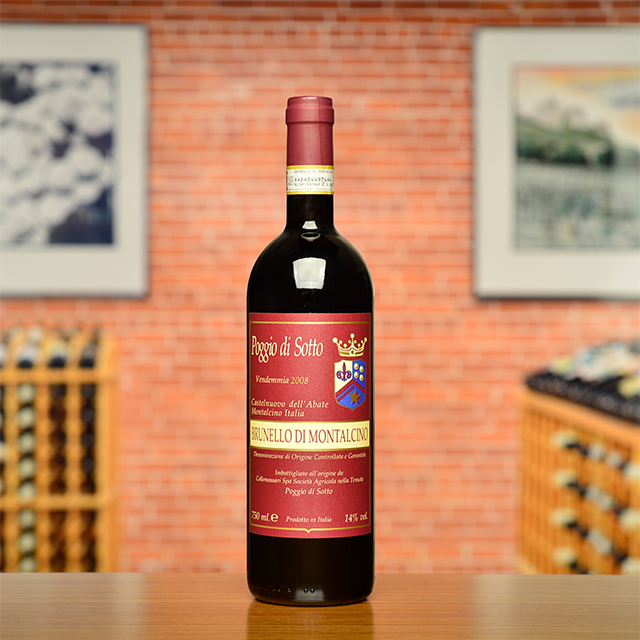
Piero Palmucci’s project at Poggio di Sotto was nothing short of remarkable. He proved definitively, in the relatively short span of twenty years, that Montalcino is capable of making some of the greatest red wines in the world. He wasn’t the first, but for me his work most significantly highlighted the importance of, and the difference between, the subzones of Montalcino. The steep, calcareous marl slopes of Castelnuovo dell’Abate can produce wines with the finesse and longevity of great Burgundy. No cellar is complete without it.
**Extremely limited quantities, maximum two bottles per purchase.**
—Dixon Brooke
|
This item is not eligible for discounts |
| Wine Type: | red |
| Vintage: | 2008 |
| Bottle Size: | 750mL |
| Blend: | Sangiovese |
| Appellation: | Brunello di Montalcino |
| Country: | Italy |
| Region: | Tuscany |
| Producer: | Poggio di Sotto |
| Winemaker: | Piero Palmucci |
| Vineyard: | 20 years average |
| Soil: | Rocky Marl |
| Aging: | Ages for 58 months in 25 to 35-hl Slavonian oak botti and 8 months in bottle |
| Farming: | Organic (practicing) |
| Alcohol: | 14% |
More from this Producer or Region

2011 Brunello di Montalcino Riserva “Santa Maria”
Italy | Tuscany
**Extremely limited quantities, maximum one bottle per purchase.**

2019 Chianti Classico Riserva
Italy | Tuscany
Concentrated, youthful, and soulful, this Sangiovese is enchanting now, but it has a long life full of gorgeous evolution ahead.

2018 Brunello di Montalcino Riserva “Santa Maria”
Italy | Tuscany
Colleoni’s Santa Maria is coursing with raw beauty, exuding rose petals and turned earth and finishing with tannins fine as silk.

2018 Brunello di Montalcino
Italy | Tuscany
Ample, deep, and succulent, this enthralling Brunello is already highly rewarding.

2017 Brunello di Montalcino
Italy | Tuscany
This 2017 is compact and absolutely brimming with energy, culminating in a grippy, stony tannin.

2020 Toscana Rosso “Brendino”
Italy | Tuscany
Planting Pinot Nero in limestone at high elevation yields a singular rosso that is anything but international in style.

2023 Rosso di Montalcino
Italy | Tuscany
Sesti‘s Rosso di Montalcino, with its seductive and mood-enhancing perfume, is like a delicious elixir of black cherry, bitter herbs, and fragrant violet.

2019 Brunello di Montalcino Riserva “Phenomena”
Italy | Tuscany
All the depth, concentration, and intensity imaginable are densely packed into a tight, firm, chewy package.

2022 Rosso di Montalcino
Italy | Tuscany
The perfume of rose petals and vivid red berry fruit, along with the delicate, fine-grained tannin, make this a truly special Rosso.


About The Producer
Poggio di Sotto
About The Region
Tuscany

Perhaps no region is tied to Italy’s reputation as a producer of fine wine as much as Tuscany. Since Etruscan times, viticulture has played a prominent role in this idyllic land of rolling hills, and the Tuscan winemaking tradition remains as strong as ever today. With a favorable Mediterranean climate, an undulating topography offering countless altitudes and expositions, and a wealth of poor, well-draining soils, conditions are ideal for crafting high-quality wines. Add to that the rich gastronomical tradition—Tuscany is home to some of the country’s finest game, pastas, salumi, and cheeses—and you have the blueprint for a world-class wine region.
This is Sangiovese territory; in fact, it is arguably the only place in the world where Sangiovese reaches a truly regal expression. In spite of a rocky history with fluctuations in quality, traditionally produced Chianti has reclaimed its status as one of the country’s most reliable, food-friendly reds, while the rapid rise of Brunello di Montalcino shows the grape’s potential for grandiose, opulent reds allying power and finesse. Traditionally-minded growers have stuck to using only indigenous grape varieties and employing techniques like aging in massive wooden casks known as botti, creating wines of terroir that shine at the Tuscan table.
Tuscan wines have had a place in our portfolio since Kermit’s first visit in 1977. While the names of the estates have changed, the spirit of those first unfiltered Chiantis he imported live on through our current selections.
More from Tuscany or Italy
2022 Chianti Classico
Podere Campriano Italy | Tuscany
2017 Brunello di Montalcino
Ferretti Italy | Tuscany
2022 Rosso di Montalcino
J.G. Benda Italy | Tuscany
2018 Brunello di Montalcino
Ferretti Italy | Tuscany
2020 Toscana Rosso “Brendino”
Cuna Italy | Tuscany
2021 Rosso di Montalcino
Ferretti Italy | Tuscany
2012 Chianti Classico Riserva MAGNUM
Villa Di Geggiano Italy | Tuscany
2020 Toscana Rosso
Cuna Italy | Tuscany
2019 Chianti Classico “Ai Lecci”
Villa di Geggiano Italy | Tuscany
2021 Chianti Classico Riserva “Fondatore”
Podere Campriano Italy | Tuscany
2017 Brunello di Montalcino
Sesti Italy | Tuscany
2023 Rosso di Montalcino
Sesti Italy | Tuscany
2022 Chianti Classico
Podere Campriano Italy | Tuscany
2017 Brunello di Montalcino
Ferretti Italy | Tuscany
2022 Rosso di Montalcino
J.G. Benda Italy | Tuscany
2018 Brunello di Montalcino
Ferretti Italy | Tuscany
2020 Toscana Rosso “Brendino”
Cuna Italy | Tuscany
2021 Rosso di Montalcino
Ferretti Italy | Tuscany
2012 Chianti Classico Riserva MAGNUM
Villa Di Geggiano Italy | Tuscany
2020 Toscana Rosso
Cuna Italy | Tuscany
2019 Chianti Classico “Ai Lecci”
Villa di Geggiano Italy | Tuscany
2021 Chianti Classico Riserva “Fondatore”
Podere Campriano Italy | Tuscany
2017 Brunello di Montalcino
Sesti Italy | Tuscany
2023 Rosso di Montalcino
Sesti Italy | Tuscany
Kermit once said...

Kermit once said...
If you're looking for value, look where no one else is looking.
Inspiring Thirst, page 211