


2022 Isola Dei Nuraghi Bianco “Prama Dorada”
Deperu Holler
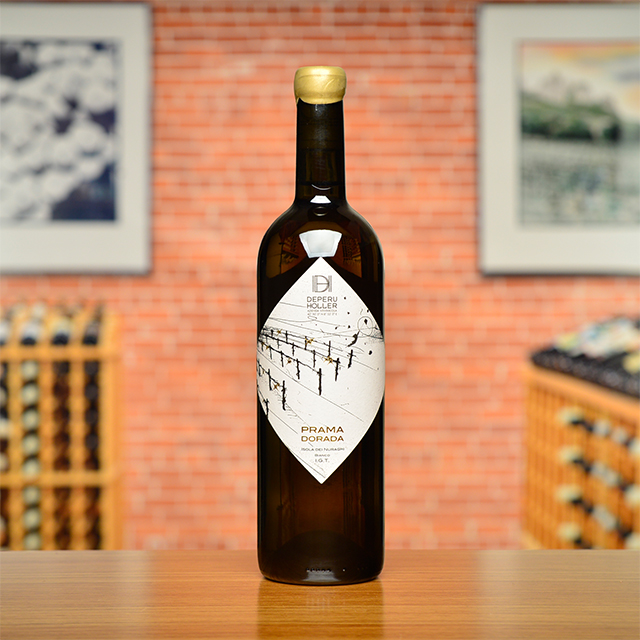
This unique creation showcases Vermentino, Moscato, Malvasia, and a host of other native varieties, skin-fermented for several days—traditional treatment in these parts—and aged for one year in acacia cask. The interplay of salinity, bitters, and a waxy richness tug at the palate in every direction, providing a textural experience you’ll particularly appreciate at table. Try it cool, but not cold, with steamed asparagus, hearty braised greens, or a spread of tinned fish and hard cheeses.
—Anthony Lynch
| Wine Type: | white |
| Vintage: | 2022 |
| Bottle Size: | 750mL |
| Blend: | 75% Vermentino, 20% Moscato & Malvasia, 5% Arvesiniadu & Nasco |
| Appellation: | Isola dei Nuraghi |
| Country: | Italy |
| Region: | Sardinia |
| Producer: | Deperu Holler |
| Winemaker: | Carlo Deperu |
| Vineyard: | 8 years, 13 years, .3 ha |
| Soil: | Limestone, marl, chalk |
| Aging: | Wine ages 9 months in stainless steel with regular lees stirring |
| Farming: | Organic (practicing) |
| Alcohol: | 13.5% |
More from this Producer or Region

2024 Vermentino Isola dei Nuraghi “Fria”
Italy | Sardinia
Mixing stone fruit with sea spray, this crisp Vermentino is the bottle you should reach for the next time you make linguine with clams or fish tacos.

2023 Isola dei Nuraghi Rosso “Oberaìa”
Italy | Sardinia
Cask-aged Sardinian Cannonau yields a quintessential Mediterranean red.

2021 Vino Bianco “Modestu”
Italy | Sardinia
Old-vine Moscato from Sardinian mountaintops, 4 days on skins, fermented dry and aged in barrel—heavenly with sea urchin pasta

2020 Isola Dei Nuraghi Bianco “Prama Dorada”
Italy | Sardinia
A field blend of Vermentino and other native Sardinian grapes, one week maceration; deep, broad, savory, and salty

2024 Isola dei Nuraghi Bianco “Maria Tzufia”
Italy | Sardinia
An irresistible aroma bursting with juicy white peach, sun-ripened citrus, wildflowers, and savory herbs, plus a mouthwateringly salty finish.

2024 Isola Dei Nuraghi Rosso “Familia”
Italy | Sardinia
Muristellu, Caricagiola, and Cannonau make up the blend, giving it plenty of local character and deep, wild fruit you can practically bite into.

2025 Rosato “Barrosu”
Italy | Sardinia
It offers deep complexity and layers of flavor, like a nectar of crushed strawberries with a savory, stony finish.

2015 Isola Dei Nuraghi Bianco
“Prama Dorada”
Italy | Sardinia
A field blend of Vermentino with Sardinian heirloom varieties. With some age, it has blossomed into a Mediterranean beauty—splendidly deep, rich, and layered.

2023 Cannonau di Sardegna
“Riserva Franzisca”
Italy | Sardinia
Sporting rich primary fruit, an intense granitic backbone, and mellow tannins, this monument to Sardinian viticulture delivers impressive power.

2024 Cannonau di Sardegna
“Barrosu”
Italy | Sardinia
With intense flavors of blood orange, brambly fruit, licorice, and herbs, Barrosu is perfectly suited to a wide range of meat slow-cooked over coals.

About The Producer
Deperu Holler
About The Region
Sardinia

Our first foray into Sardegna is very recent, and it only took one trip to fall in love with the island, its culture, and its wines. Similar to its northerly neighbor, Corsica, there is a strong regional identity here that goes far beyond its official status as one of Italy’s twenty regions. Its people are proud, strong-willed, and deeply attached to their traditions—a distinctive character often seen with island people and accentuated by its long history of invasions and outside rule.
This tumultuous past has resulted in diverse influences—Greek, Roman, Aragonese, Catalan, and Ligurian, just to name a few—that have shaped the island’s culture, language, cuisine, and wines over many centuries. While Vermentino and Cannonau (aka Grenache) reign, Sardegna also boasts a number of indigenous grapes that are capable of expressing something unique in its abundant variety of terroirs.
The Mediterranean plays a major role, providing cooling, salty breezes to coastal areas, while the rugged, mountainous interior is home to high-altitude sites where wines retain freshness in spite of the southerly latitude. The granitic highlands of Gallura and Barbagia come to mind as some of its most qualitative zones, but a range of soils, elevations, and varying distance to the sea mean that the island is capable of producing wines in all styles, from crisp whites to powerful reds and exquisite vini dolci.
The three growers we represent bring something new to the table, something fascinating that is not found elsewhere in Italy or even in nearby Corsica. Their wines evoke the rustic beauty of this fascinating island civilization, and of course, pair perfectly with the local cuisine, be it seafood-based or the hearty, earthy specialties of its interior.
More from Sardinia or Italy
2021 Vino Bianco “Modestu”
Giovanni Montisci Italy | Sardinia
2025 Rosato “Barrosu”
Montisci Italy | Sardinia
2024 Cannonau di Sardegna
“Barrosu”
Montisci Italy | Sardinia
2015 Isola Dei Nuraghi Bianco
“Prama Dorada”
Deperu Holler Italy | Sardinia
2023 Cannonau di Sardegna
“Riserva Franzisca”
Giovanni Montisci Italy | Sardinia
2024 Isola dei Nuraghi Bianco “Maria Tzufia”
Deperu Holler Italy | Sardinia
2024 Vermentino Isola dei Nuraghi “Fria”
Deperu Holler Italy | Sardinia
2020 Isola Dei Nuraghi Bianco “Prama Dorada”
Deperu Holler Italy | Sardinia
2024 Isola Dei Nuraghi Rosso “Familia”
Deperu Holler Italy | Sardinia
2020 Vino Rosso “Barrolu”
Giovanni Montisci Italy | Sardinia
2024 Cannonau di Sardegna “Clos Camilla”
Montisci Italy | Sardinia
2023 Isola dei Nuraghi Rosso “Oberaìa”
Deperu Holler Italy | Sardinia
2021 Vino Bianco “Modestu”
Giovanni Montisci Italy | Sardinia
2025 Rosato “Barrosu”
Montisci Italy | Sardinia
2024 Cannonau di Sardegna
“Barrosu”
Montisci Italy | Sardinia
2015 Isola Dei Nuraghi Bianco
“Prama Dorada”
Deperu Holler Italy | Sardinia
2023 Cannonau di Sardegna
“Riserva Franzisca”
Giovanni Montisci Italy | Sardinia
2024 Isola dei Nuraghi Bianco “Maria Tzufia”
Deperu Holler Italy | Sardinia
2024 Vermentino Isola dei Nuraghi “Fria”
Deperu Holler Italy | Sardinia
2020 Isola Dei Nuraghi Bianco “Prama Dorada”
Deperu Holler Italy | Sardinia
2024 Isola Dei Nuraghi Rosso “Familia”
Deperu Holler Italy | Sardinia
2020 Vino Rosso “Barrolu”
Giovanni Montisci Italy | Sardinia
2024 Cannonau di Sardegna “Clos Camilla”
Montisci Italy | Sardinia
2023 Isola dei Nuraghi Rosso “Oberaìa”
Deperu Holler Italy | Sardinia
Kermit once said...

Kermit once said...
I want you to realize once and for all: Even the winemaker does not know what aging is going to do to a new vintage; Robert Parker does not know; I do not know. We all make educated (hopefully) guesses about what the future will bring, but guesses they are. And one of the pleasures of a wine cellar is the opportunity it provides for you to witness the evolution of your various selections. Living wines have ups and downs just as people do, periods of glory and dog days, too. If wine did not remind me of real life, I would not care about it so much.
Inspiring Thirst, page 171