


2021 Faugères
Leon Barral
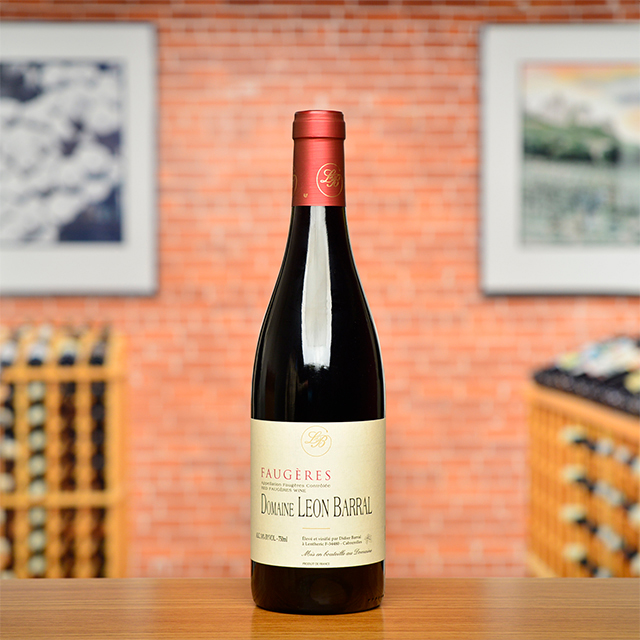
The first time I tasted Domaine Leon Barral’s Faugères—before I knew much about Didier Barral, who named the domaine for his grandfather—I experienced a coup de foudre. It wasn’t really because of the wine’s succulent notes of mixed red and black fruit, spices, and leather. It wasn’t even that it was somehow simultaneously rustic and graceful, dark and light on its feet. Instead, I fell in love with Barral’s Faugères because of the raw, primal feeling the wine gave me: specifically, the desire to go hunting with my uncle in the backwoods of Maine and sip this soulful red by a campfire, far away from city lights and social media.
Some time after, I discovered that Didier is our last producer to work off the grid, with no cell phone, no email, and no computer. He gardens and raises cows and pigs on his property an hour west of Montpellier. The animals fertilize the soils, trim competing vegetation, and eventually feed Didier and his family. Most importantly, he farms biodynamically, with a zealous devotion to biodiversity, creating an ideal habitat for his vines and all the life around them.
Incredibly, the wine had communicated a love of nature on its own, before I knew any of this. I therefore recommend that you open a bottle of the Faugères in the outdoors. Take it on your next camping trip or fishing excursion, or at the very least, open it in your backyard and leave your phone inside.
—Tom Wolf
| Wine Type: | red |
| Vintage: | 2021 |
| Bottle Size: | 750mL |
| Blend: | 50% Carignan, 30% Grenache, 20% Cinsault |
| Appellation: | Faugères |
| Country: | France |
| Region: | Languedoc-Roussillon |
| Producer: | Domaine Leon Barral |
| Winemaker: | Didier Barral |
| Vineyard: | 40 to 70 years, 14 ha |
| Soil: | Schist |
| Aging: | Aged for 2 years in cement and stainless steel cuves |
| Farming: | Biodynamic (practicing) |
| Alcohol: | 13% |
More from this Producer or Region

2020 Faugères “Jadis”
France | Languedoc-Roussillon
Earthy, meaty, savory, juicy, and powerful, it is a glassful of joyful, soulful goodness.

2023 Vin de France “Le Carignan”
France | Languedoc-Roussillon
Old vines give this Carignan a supple, suede-like texture, along with loads of dark fruit, a peaty smokiness, and great minerality.

2020 Faugères “Valinière”
France | Languedoc-Roussillon
Valinière is a monumental demonstration of what happens when respectfully working the earth is not just a job, but one’s whole life.

2023 Saint-Chinian Rouge “Causse du Bousquet”
France | Languedoc-Roussillon
Made mostly from Syrah—with a splash of Grenache, Mourvèdre, Carignan, and Cinsault—this cuvée is all about the terroir. Along with soulful, dark fruit, you can taste the stoniness in the wine. Cool it down, decant it in any kind of vase you have handy, and serve it the next time you fire up your grill.

2021 Pays d’Hérault Rouge
Domaine de la Grange des Pères
France | Languedoc-Roussillon
Grange des Pères defies categorization and redefines greatness.

2024 Vin de France “Le Carignan”
France | Languedoc-Roussillon
Old vines give this Carignan a supple, suede-like texture, along with loads of dark fruit, a peaty smokiness, and great minerality.

2021 Corbières “Rozeta”
France | Languedoc-Roussillon
The Rozeta features the exuberant, inviting perfume and velvety wild fruit we expect from a wine that underwent 100% whole-cluster fermentation.
2021 Gard Rouge “Clausus”
France | Languedoc-Roussillon
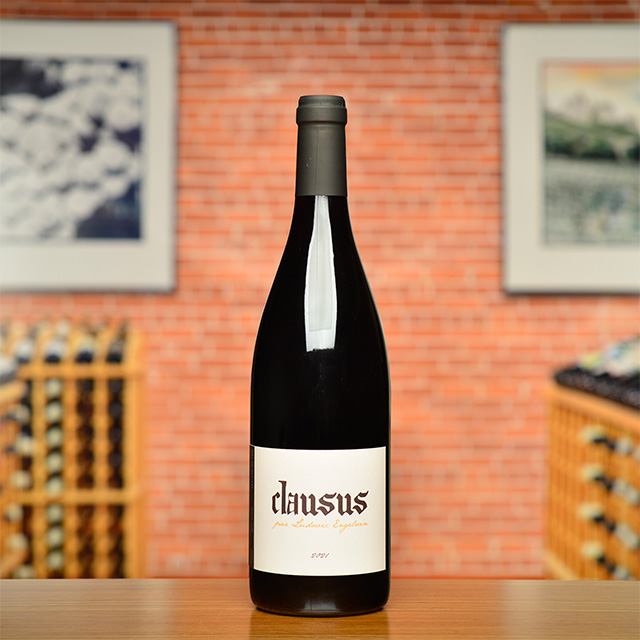
This wine is full of fresh Grenache fruit, beautifully perfumed, with a refined and elegant finish.

2022 Vin de France Blanc
France | Languedoc-Roussillon
Searching for something a bit funky to enliven your jaded palate? Look no further and prepare for an experience like none other.

2022 Corbières Rouge “Campagnès”
France | Languedoc-Roussillon
Carignan from very old vines with immense depth but the immediate drinkability of a Cru Beaujolais.


About The Producer
Domaine Leon Barral
Didier Barral represents the 13th generation to grow grapes in the tiny hamlet of Lenthéric, deep in the heart of the Languedoc. Domaine Léon Barral is a beacon of revolutionary winegrowing: shortly after founding the domaine, Didier decided that biodynamic practices were best for his 30 hectares of vineyards. His vines are very old—some up to 90 years of age—keeping yields naturally low. Once in the cellar, Didier’s harvest is cared for with the same zeal, though he would consider the wine all but finished once it leaves the vineyard. This level of artisanship was once nearly extinct, had it not been for Didier and the profound influence he has over viticulteurs who now see how his work ethic and ideology translates to results.
About The Region
Languedoc-Roussillon

Ask wine drinkers around the world, and the word “Languedoc” is sure to elicit mixed reactions. On the one hand, the region is still strongly tied to its past as a producer of cheap, insipid bulk wine in the eyes of many consumers. On the other hand, it is the source of countless great values providing affordable everyday pleasure, with an increasing number of higher-end wines capable of rivaling the best from other parts of France.
While there’s no denying the Languedoc’s checkered history, the last two decades have seen a noticeable shift to fine wine, with an emphasis on terroir. Ambitious growers have sought out vineyard sites with poor, well draining soils in hilly zones, curbed back on irrigation and the use of synthetic fertilizers and pesticides, and looked to balance traditional production methods with technological advancements to craft wines with elegance, balance, and a clear sense of place. Today, the overall quality and variety of wines being made in the Languedoc is as high as ever.
Shaped like a crescent hugging the Mediterranean coast, the region boasts an enormous variety of soil types and microclimates depending on elevation, exposition, and relative distance from the coastline and the cooler foothills farther inland. While the warm Mediterranean climate is conducive to the production of reds, there are world-class whites and rosés to be found as well, along with stunning dessert wines revered by connoisseurs for centuries.
More from Languedoc-Roussillon or France
2023 Corbières Rouge
Domaine de Fontsainte France | Languedoc-Roussillon
2025 Pic Saint Loup Rosé
Héritage du Pic Saint Loup France | Languedoc-Roussillon
2022 Collioure Rouge “La Pinède”
Domaine La Tour Vieille France | Languedoc-Roussillon
2020 Faugères “Valinière”
Leon Barral France | Languedoc-Roussillon
2024 Saint-Chinian Rouge “La Pierre Plantée”
Les Eminades France | Languedoc-Roussillon
2021 Corbières “Rozeta”
Maxime Magnon France | Languedoc-Roussillon
2022 Collioure Rouge “Puig Oriol”
Domaine La Tour Vieille France | Languedoc-Roussillon
2023 Saint-Chinian Rouge “Causse du Bousquet”
Mas Champart France | Languedoc-Roussillon
2021 Languedoc Montpeyroux Rouge “Les Cocalières”
Domaine d’Aupilhac France | Languedoc-Roussillon
Banyuls Vinegar
Domaine La Tour Vieille France | Languedoc-Roussillon
2022 Vin de France Blanc
Domaine Leon Barral France | Languedoc-Roussillon
2024 Pays d’Oc Cabernet Sauvignon “Les Traverses”
Château Fontanès France | Languedoc-Roussillon
2023 Corbières Rouge
Domaine de Fontsainte France | Languedoc-Roussillon
2025 Pic Saint Loup Rosé
Héritage du Pic Saint Loup France | Languedoc-Roussillon
2022 Collioure Rouge “La Pinède”
Domaine La Tour Vieille France | Languedoc-Roussillon
2020 Faugères “Valinière”
Leon Barral France | Languedoc-Roussillon
2024 Saint-Chinian Rouge “La Pierre Plantée”
Les Eminades France | Languedoc-Roussillon
2021 Corbières “Rozeta”
Maxime Magnon France | Languedoc-Roussillon
2022 Collioure Rouge “Puig Oriol”
Domaine La Tour Vieille France | Languedoc-Roussillon
2023 Saint-Chinian Rouge “Causse du Bousquet”
Mas Champart France | Languedoc-Roussillon
2021 Languedoc Montpeyroux Rouge “Les Cocalières”
Domaine d’Aupilhac France | Languedoc-Roussillon
Banyuls Vinegar
Domaine La Tour Vieille France | Languedoc-Roussillon
2022 Vin de France Blanc
Domaine Leon Barral France | Languedoc-Roussillon
2024 Pays d’Oc Cabernet Sauvignon “Les Traverses”
Château Fontanès France | Languedoc-Roussillon
Kermit once said...

Kermit once said...
I want you to realize once and for all: Even the winemaker does not know what aging is going to do to a new vintage; Robert Parker does not know; I do not know. We all make educated (hopefully) guesses about what the future will bring, but guesses they are. And one of the pleasures of a wine cellar is the opportunity it provides for you to witness the evolution of your various selections. Living wines have ups and downs just as people do, periods of glory and dog days, too. If wine did not remind me of real life, I would not care about it so much.
Inspiring Thirst, page 171