


2021 Fleurie “Les Moriers”
Domaine Chignard

Cédric Chignard
“Les Moriers” is an exceptional vineyard in the cru of Fleurie; not only is it steep and stony, with a granite core, but a portion of it reaches into Moulin-à-Vent, a cru known for its structural depth and Rhône-like aromatics. Fleurie, by contrast, is thought to be more delicate, pretty and floral, as its name suggests. In Chignard’s “Les Moriers” we have elements of both crus coming together as one, resulting in a harmonious balance of heft and gravitas, laced with violet and a fresh-cut, blossoming bouquet. If there were only one Beaujolais to call “versatile,” this would be it.
—Jane Augustine
| Wine Type: | red |
| Vintage: | 2021 |
| Bottle Size: | 750mL |
| Blend: | Gamay |
| Appellation: | Fleurie |
| Country: | France |
| Region: | Beaujolais |
| Producer: | Domaine Chignard |
| Winemaker: | Michel & Cédric Chignard |
| Vineyard: | 60 years, 8 ha |
| Soil: | Granite |
| Aging: | Aged in old foudres (large oak barrels) for 13 months |
| Farming: | Lutte Raisonnée |
| Alcohol: | 12.5% |
More from this Producer or Region

2024 Morgon
France | Beaujolais
The domaine’s flagship bottling, crafted from vines averaging sixty years old; inviting aromatics, succulent flesh, juicy finish.

2024 Côte de Brouilly
France | Beaujolais
Brambly and mineral, this bottling exudes both the convivial charm of Gamay and the crunchy intensity of the Côte de Brouilly.

2023 Chénas “Vibrations”
France | Beaujolais
Its shimmering red fruit comes alive with a nice chill.
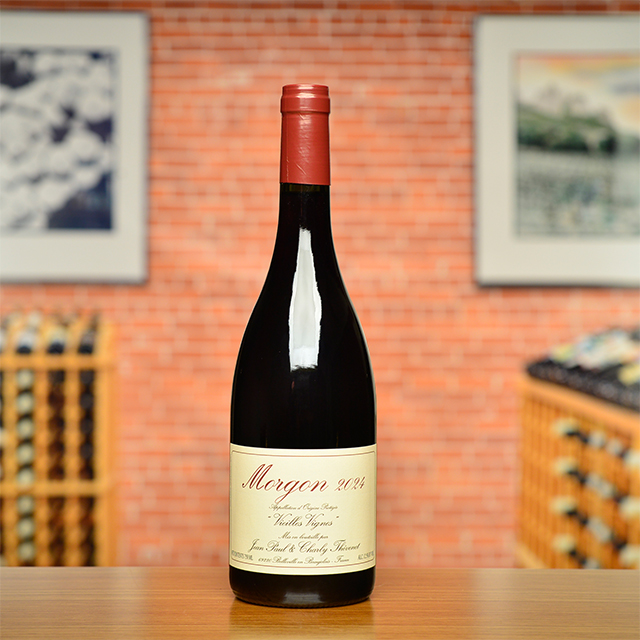
2024 Morgon “Vieilles Vignes”
France | Beaujolais
If Beaujolais were Burgundy, we might consider Morgon to be Vosne-Romanée, with its haunting perfume and silky texture, the proverbial iron fist in a velvet glove.

2024 Côte de Brouilly MAGNUM
France | Beaujolais
Château Thivin’s Côte de Brouilly seamlessly fuses pleasure, class, and intellect.

2024 Morgon“Cuvée Marcel Lapierre”
France | Beaujolais
This particular bottling represents a rare cuvée spéciale from vines over one hundred years old; the texture here is pure velvet.

2024 Régnié “Grain & Granit”
France | Beaujolais
Here is a rich, bold Régnié, saturated with luscious fruit and earthy spice.
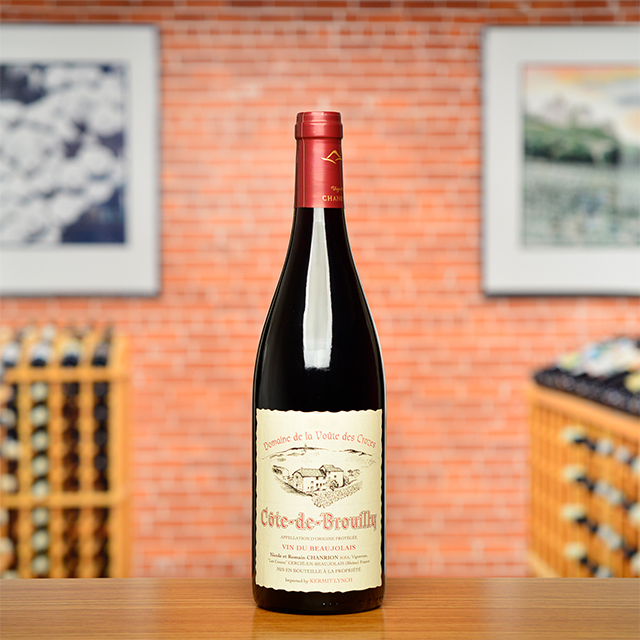
2024 Côte-de-Brouilly
France | Beaujolais
Stony, faintly spicy, and elegant, it’s the kind of bottle you want to pop open again as soon as the first is drained.

2023 Chénas “Chassignol”
France | Beaujolais
A finessed, mineral-driven beauty from hundred-year-old vines at the highest point in Chénas.

2024 Vin de France Rouge “Raisins Gaulois”
France | Beaujolais
This juicy red is low in alcohol and delightfully refreshing.


About The Producer
Domaine Chignard
About The Region
Beaujolais

After years of the region’s reputation being co-opted by mass-produced Beaujolais Nouveau and the prevalence of industrial farming, the fortunes of vignerons from the Beaujolais have been on the rise in the past couple of decades. Much of this change is due to Jules Chauvet, a prominent Beaujolais producer who Kermit worked with in the 1980s and arguably the father of the natural wine movement, who advocated not using herbicides or pesticides in vineyards, not chaptalizing, fermenting with ambient yeasts, and vinifying without SO2. Chief among Chauvet’s followers was Marcel Lapierre and his three friends, Jean Foillard, Guy Breton, and Jean-Paul Thévenet—a group of Morgon producers who Kermit dubbed “the Gang of Four.” The espousal of Chauvet’s methods led to a dramatic change in quality of wines from Beaujolais and with that an increased interest and appreciation for the AOC crus, Villages, and regular Beaujolais bottlings.
The crus of Beaujolais are interpreted through the Gamay grape and each illuminate the variety of great terroirs available in the region. Distinguishing itself from the clay and limestone of Burgundy, Beaujolais soils are predominantly decomposed granite, with pockets of blue volcanic rock. The primary vinification method is carbonic maceration, where grapes are not crushed, but instead whole clusters are placed in a tank, thus allowing fermentation to take place inside each grape berry.
Much like the easy-going and friendly nature of many Beaujolais vignerons, the wines too have a lively and easy-drinking spirit. They are versatile at table but make particularly good matches with the local pork sausages and charcuterie. Though often considered a wine that must be drunk young, many of the top crus offer great aging potential.
More from Beaujolais or France
2024 Chénas “Vibrations”
Domaine Thillardon France | Beaujolais
2024 Morgon
M. & C. Lapierre France | Beaujolais
2024 Morgon “Vieilles Vignes”
Guy Breton France | Beaujolais
2024 Moulin-à-Vent “Vieilles Vignes”
Bernard Diochon France | Beaujolais
2021 Brouilly
Alex Foillard France | Beaujolais
2023 Chénas “Les Blémonts”
Domaine Thillardon France | Beaujolais
2021 Beaujolais Blanc “Terrain Rouge”
Jean-Paul et Charly Thévenet France | Beaujolais
2024 Côte de Brouilly “Cuvée Zaccharie”
Château Thivin France | Beaujolais
2025 Beaujolais Nouveau
La Sœur Cadette France | Beaujolais
2024 Régnié “Grain & Granit”
Jean Paul et Charly Thévenet France | Beaujolais
2024 Juliénas
La Soeur Cadette France | Beaujolais
2024 Régnié
Guy Breton France | Beaujolais
2024 Chénas “Vibrations”
Domaine Thillardon France | Beaujolais
2024 Morgon
M. & C. Lapierre France | Beaujolais
2024 Morgon “Vieilles Vignes”
Guy Breton France | Beaujolais
2024 Moulin-à-Vent “Vieilles Vignes”
Bernard Diochon France | Beaujolais
2021 Brouilly
Alex Foillard France | Beaujolais
2023 Chénas “Les Blémonts”
Domaine Thillardon France | Beaujolais
2021 Beaujolais Blanc “Terrain Rouge”
Jean-Paul et Charly Thévenet France | Beaujolais
2024 Côte de Brouilly “Cuvée Zaccharie”
Château Thivin France | Beaujolais
2025 Beaujolais Nouveau
La Sœur Cadette France | Beaujolais
2024 Régnié “Grain & Granit”
Jean Paul et Charly Thévenet France | Beaujolais
2024 Juliénas
La Soeur Cadette France | Beaujolais
2024 Régnié
Guy Breton France | Beaujolais
Vintage Chart Mentality

Vintage Chart Mentality
Trust the great winemakers, trust the great vineyards. Your wine merchant might even be trustworthy. In the long run, that vintage strip may be the least important guide to quality on your bottle of wine.—Kermit Lynch