


2018 Raisins Gaulois
M. & C. Lapierre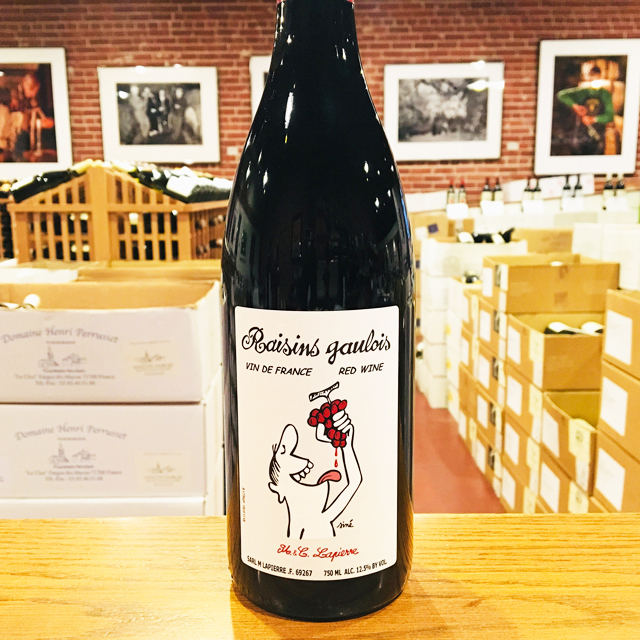
What’s the best turn of phrase to describe this year’s Raisins Gaulois, a vintage that combines the structure and depth of a cru Beaujolais with the unencumbered joie de vivre we’ve come to love and expect? Some options: seriously lighthearted; frivolously brooding; mercurially pragmatic. Let’s all try a bottle and then take a vote.
—Dustin Soiseth
| Wine Type: | red |
| Vintage: | 2018 |
| Bottle Size: | 750mL |
| Blend: | Gamay |
| Appellation: | Vin de France |
| Country: | France |
| Region: | Beaujolais |
| Producer: | M. & C. Lapierre |
| Winemaker: | Mathieu Lapierre |
| Vineyard: | < 20 yrs, 1.5 ha |
| Soil: | Granitic Gravel |
| Farming: | Organic (practicing) |
| Alcohol: | 12.5% |
More from this Producer or Region
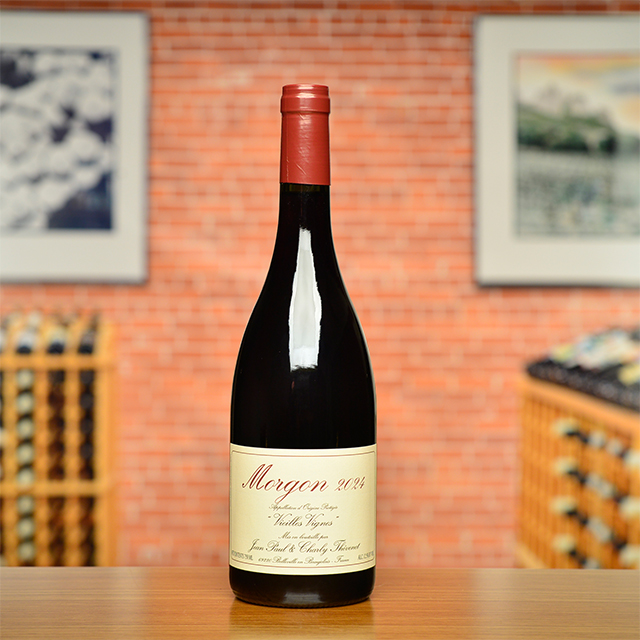
2024 Morgon “Vieilles Vignes”
France | Beaujolais
If Beaujolais were Burgundy, we might consider Morgon to be Vosne-Romanée, with its haunting perfume and silky texture, the proverbial iron fist in a velvet glove.

2021 Côte de Brouilly
France | Beaujolais
Alex Foillard fashions a Côte-de-Brouilly that strikes a deeper register, saturating the senses with tooth-staining fruit.

2024 Vin de France Rouge “Raisins Gaulois”
France | Beaujolais
This juicy red—loaded with bright, playful fruit—is low in alcohol and delightfully refreshing.

2022 Côte de Brouilly
France | Beaujolais
A relatively new addition to Guy Breton’s Beaujolais lineup, this exuberant Côte de Brouilly is flat-out delicious.

2025 Beaujolais Nouveau
France | Beaujolais
Limited Quantities! ~ Valentin Montanet’s rendition has guts, but it sure is kickin’, too, with loads of cherries and heaps of joy.

2024 Morgon“Cuvée Marcel Lapierre”
France | Beaujolais
This particular bottling represents a rare cuvée spéciale from vines over one hundred years old; the texture here is pure velvet.

2024 Beaujolais
France | Beaujolais
Tangy, thirst-quenching Gamay from a family that has been making Beaujolais for over 500 years.

2024 Régnié
France | Beaujolais
Savor it while you can, because your glass will be empty before you know it, leaving you only with the spicy, mineral-laden aftertaste of a bottle that went down way too easily.

2023 Beaujolais Blanc
France | Beaujolais
March Adventures Club ~ Do not miss this outstanding, value-driven Chardonnay from one of our most beloved French domaines.

2024 Morgon
France | Beaujolais
The domaine’s flagship bottling, crafted from vines averaging sixty years old; inviting aromatics, succulent flesh, juicy finish.


About The Producer
M. & C. Lapierre
Little would we know that when Marcel Lapierre took over the family domaine from his father in 1973, he was on the road to becoming a legend. Following the example of traditionalist Jules Chauvet, Marcel and three other local vignerons Jean Foillard, Jean-Paul Thévenet, and Guy Breton, soon hoisted the flag of Chauvet’s back-to-nature movement. Kermit dubbed this clan the Gang of Four, and the name has stuck ever since. The Gang called for a return to the old practices of viticulture and vinification. Sadly, the 2010 vintage was Marcel’s last. His children, Mathieu and Camille continue the great work that their father pioneered, introducing biodynamic vineyard practices and ensuring that Marcel's legacy lives on.
About The Region
Beaujolais

After years of the region’s reputation being co-opted by mass-produced Beaujolais Nouveau and the prevalence of industrial farming, the fortunes of vignerons from the Beaujolais have been on the rise in the past couple of decades. Much of this change is due to Jules Chauvet, a prominent Beaujolais producer who Kermit worked with in the 1980s and arguably the father of the natural wine movement, who advocated not using herbicides or pesticides in vineyards, not chaptalizing, fermenting with ambient yeasts, and vinifying without SO2. Chief among Chauvet’s followers was Marcel Lapierre and his three friends, Jean Foillard, Guy Breton, and Jean-Paul Thévenet—a group of Morgon producers who Kermit dubbed “the Gang of Four.” The espousal of Chauvet’s methods led to a dramatic change in quality of wines from Beaujolais and with that an increased interest and appreciation for the AOC crus, Villages, and regular Beaujolais bottlings.
The crus of Beaujolais are interpreted through the Gamay grape and each illuminate the variety of great terroirs available in the region. Distinguishing itself from the clay and limestone of Burgundy, Beaujolais soils are predominantly decomposed granite, with pockets of blue volcanic rock. The primary vinification method is carbonic maceration, where grapes are not crushed, but instead whole clusters are placed in a tank, thus allowing fermentation to take place inside each grape berry.
Much like the easy-going and friendly nature of many Beaujolais vignerons, the wines too have a lively and easy-drinking spirit. They are versatile at table but make particularly good matches with the local pork sausages and charcuterie. Though often considered a wine that must be drunk young, many of the top crus offer great aging potential.
More from Beaujolais or France
2023 Côte de Brouilly
Alex Foillard France | Beaujolais
2025 Beaujolais Nouveau
La Sœur Cadette France | Beaujolais
2024 Côte de Brouilly “Cuvée Zaccharie”
Château Thivin France | Beaujolais
2023 Chénas “Chassignol”
Domaine Thillardon France | Beaujolais
2023 Beaujolais-Villages
Jean Foillard France | Beaujolais
2024 Moulin-à-Vent “Sous la Roche”
Domaine Thillardon France | Beaujolais
2024 Régnié
Guy Breton France | Beaujolais
2024 Beaujolais-Villages
Alex Foillard France | Beaujolais
2023 Chénas “Vibrations”
Domaine Thillardon France | Beaujolais
2024 Morgon “Vieilles Vignes”
Jean-Paul et Charly Thévenet France | Beaujolais
2024 Moulin-à-Vent “Vieilles Vignes”
Bernard Diochon France | Beaujolais
2021 Côte de Brouilly
Alex Foillard France | Beaujolais
2023 Côte de Brouilly
Alex Foillard France | Beaujolais
2025 Beaujolais Nouveau
La Sœur Cadette France | Beaujolais
2024 Côte de Brouilly “Cuvée Zaccharie”
Château Thivin France | Beaujolais
2023 Chénas “Chassignol”
Domaine Thillardon France | Beaujolais
2023 Beaujolais-Villages
Jean Foillard France | Beaujolais
2024 Moulin-à-Vent “Sous la Roche”
Domaine Thillardon France | Beaujolais
2024 Régnié
Guy Breton France | Beaujolais
2024 Beaujolais-Villages
Alex Foillard France | Beaujolais
2023 Chénas “Vibrations”
Domaine Thillardon France | Beaujolais
2024 Morgon “Vieilles Vignes”
Jean-Paul et Charly Thévenet France | Beaujolais
2024 Moulin-à-Vent “Vieilles Vignes”
Bernard Diochon France | Beaujolais
2021 Côte de Brouilly
Alex Foillard France | Beaujolais
Kermit once said...

Kermit once said...
For the wines that I buy I insist that the winemaker leave them whole, intact. I go into the cellars now and select specific barrels or cuvées, and I request that they be bottled without stripping them with filters or other devices. This means that many of our wines will arrive with a smudge of sediment and will throw a more important deposit as time goes by, It also means the wine will taste better.