


2023 Cahors
Clos La Coutale
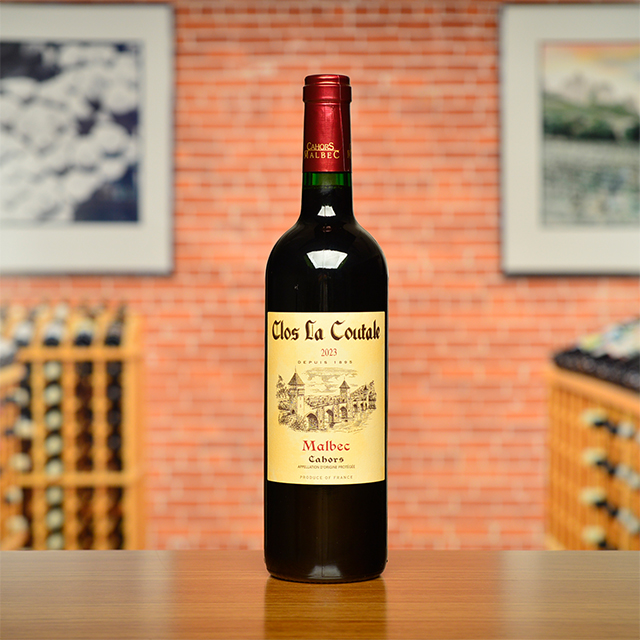
Last year, my family purchased a quarter cow share from our local farm, returning home with a variety of cuts, mostly ground beef and chuck. We got enough ribeyes and New York strips to have a steak night once a month or so, which always feels like a special occasion. For steak night wine pairings, we’ve opened red Burgundy, Saint-Joseph, Bandol, Chianti Classico, and this Cahors, which holds its own among these celebrated appellations. The 2023 vintage has a slightly wild streak, which goes perfectly with a medium-rare ribeye and roast rosemary potatoes. Of course, I can think of plenty of pairings beyond red meat: cassoulet, vegetable stew, quesadillas—the list goes on.
—Tom Wolf
| Wine Type: | red |
| Vintage: | 2023 |
| Bottle Size: | 750mL |
| Blend: | 80% Malbec, 20% Merlot |
| Appellation: | Cahors |
| Country: | France |
| Region: | Southwest |
| Producer: | Clos La Coutale |
| Winemaker: | Philippe Bernède |
| Vineyard: | 60 ha |
| Soil: | Gravel, limestone, clay |
| Aging: | Aged in foudres and 1-2 years old Bordeaux barrels for one year |
| Farming: | Traditional |
| Alcohol: | 13.5% |
More from this Producer or Region

2023 Cahors
France | Southwest
La Grave is one of the rare Cahors to consist exclusively of the native Malbec. Without any Merlot to soften it, this Cahors is decidedly old-fashioned.

2023 Cahors HALF BOTTLE
France | Southwest
A red perennially punches way above its weight, both in the immediate pleasure it delivers and the way it evolves in the bottle over time.

2021 Irouléguy Rouge “Cuvée Haitza”
France | Southwest
A black wine made from steep inclines planted to Tannat and some Cabernet Sauvignon, it demands patience while its dense, mouth-coating tannins slowly release their clutching grip.

About The Producer
Clos La Coutale
Today, Cahors’ jack-of-all-trades and Renaissance man, Philippe Bernède, continues the family tradition with both heart and ingenuity. Philippe’s vines rest upon the gentle slopes that rise up from the Lot River. Over the years, Philippe has tinkered with the house blend to achieve a greater equilibrium. Today, the blend consists of 80% Malbec and 20% Merlot, creating an intense wine that juggles elegant rusticity with everyday drinkability. Coutale has quite a record of age-worthiness as well and Philippe is not afraid to pull out older vintages of his wines alongside much more expensive Bordeaux. They stand up pretty well! Nothing beats bécasse (woodcock) or cassoulet with an old Coutale, but a simple steak fits the bill just fine.
About The Region
Southwest

Tucked away beneath Bordeaux and buffeted by the Pyrenees to the south, this expansive region of France, commonly known as the Southwest, is home to a diverse number of viticulture and gastronomic traditions as well as cultures. Though Cahors might be the most well known (and easiest to pronounce) appellation from the Southwest, the importance and influence of French Basque culture cannot be underestimated. Irouléguy, the primary appellation of the Basque region of France produces full-bodied, hearty red wines, produced from Tannat grape (known for its tannic qualities). Dry whites from Irouléguy are also produced from Petit and Gros Manseng. Northeast of Irouléguy is the sweet wine-producing appellation of Jurançon. These moelleux wines made from Petit and Gros Manseng have a storied history in France, from being the first wine region to have a vineyard classification, which dates back to the 154th century, to being preferred wine of royalty dating back to the 16th century as well as the French poet Colette.
More from Southwest or France
2024 Côte de Brouilly “Cuvée Zaccharie”
Château Thivin France | Beaujolais
2024 Gewurztraminer
Albert Boxler France | Alsace
2021 Irouléguy Rouge “Cuvée Haitza”
Maison Arretxea France | Southwest
2023 Collines Rhodaniennes Syrah “l’Art Zélé”
Lionel Faury France | Northern Rhône
2023 Saint-Emilion Grand Cru
Château Tertre de la Mouleyre France | Bordeaux
2022 Riesling Grand Cru “Muenchberg”
Domaine Ostertag France | Alsace
2023 Cahors
Château La Grave France | Southwest
2023 Auxey-Duresses Blanc “Les Hautés”
Jean-Marc Vincent France | Burgundy
Ratafia de Bourgogne
Didier Meuzard France | Burgundy
2021 Chinon “La Croix Boissée”
Bernard Baudry France | Loire
2022 Saint-Véran “Les Pommards Vieilles Vignes”
Domaine Robert-Denogent France | Burgundy
2023 Cahors HALF BOTTLE
Clos La Coutale France | Southwest
2024 Côte de Brouilly “Cuvée Zaccharie”
Château Thivin France | Beaujolais
2024 Gewurztraminer
Albert Boxler France | Alsace
2021 Irouléguy Rouge “Cuvée Haitza”
Maison Arretxea France | Southwest
2023 Collines Rhodaniennes Syrah “l’Art Zélé”
Lionel Faury France | Northern Rhône
2023 Saint-Emilion Grand Cru
Château Tertre de la Mouleyre France | Bordeaux
2022 Riesling Grand Cru “Muenchberg”
Domaine Ostertag France | Alsace
2023 Cahors
Château La Grave France | Southwest
2023 Auxey-Duresses Blanc “Les Hautés”
Jean-Marc Vincent France | Burgundy
Ratafia de Bourgogne
Didier Meuzard France | Burgundy
2021 Chinon “La Croix Boissée”
Bernard Baudry France | Loire
2022 Saint-Véran “Les Pommards Vieilles Vignes”
Domaine Robert-Denogent France | Burgundy
2023 Cahors HALF BOTTLE
Clos La Coutale France | Southwest
Kermit once said...

Kermit once said...
If you're looking for value, look where no one else is looking.
Inspiring Thirst, page 211